Sunday, February 7, 2016

When to "Pivot" (or give up!)

"Pivot" is the term used in the world of the "Start-up" when you decide what you have been focusing on isn't working, and you need to change to something else, or change focus.  

A good example from Steve Blank would be your developing this great THING1 and to check if it is actually as great as you think it is, you go to the people you think will buy it, and ask  1 or 2 of them, “If we gave you THING1, would you use it?”   If they answer NO, because they have too much invested in what ever they are currently using, you are probably wasting your time doing THING1 at all. 

But what if it is more personal than that?

You do something, pretty well, and people get you to do it for them, for money, but it doesn't pay enough to be a full-time job, or you don’t have enough customers and it starts to interfere with you actually making a real living?

These more personal things are what can face your typical writer, musician, actor, dancer or artist.  They are doing this thing because they enjoy it, and they are trying to make it a full time gig, possibly as they don’t have any other practical option.  They can also do it just part time, but what if they have to make a decision to continue on a dream or be more practical?

How long then?  “Before the money runs out”, may be one answer, but for others it may be more along the lines of “Well it is fun, but it doesn't pay enough to be worth while with our current other commitments and available energy, I need to give up and just keep it a hobby”.

I know of a Band that produced several albums, toured, but decided they couldn't give up their day jobs......  and it took a year or two to work that out.

Don’t think there are any hard and fast answers, but suggest, “Taking a break”, can help in deciding how to move forward…especially if the special thing isn't what your relying on to support you.....  it is all good experience forming the “rich tapestry of your life”


Saturday, January 23, 2016

Jean-Michel Jarre ‎– Magnetic Fields (and the cool stirred glass of water)

Les Chants Magnétiques, at about the 23 minute mark, after a train passes, has a track that has this weird rhythmical sound as a foundation.

That sound was on one of the sound discs that we used in the factory in those far off Fairlight Instruments CMI Series I assembly and testing days.

It is actually the sound of a tea spoon being stirred in a glass of water.  At normal pitch it is nothing special, and just another sound effect.  In the track it is played at several much lower pitches and is the foundation of the track and I think it just sounds "watery"...

So why am I bringing this up?   

In the promotional material about the release and making of Jean-Michel Jarre's latest  Electronica Part 1 album, he talks about many old instruments, and the 8bit , max of 22 kHz, 1 second sampling time CMI Series 1 gets a mention as being instant cool.  Now, I was central in the design of the much high sound quality (better than CD) Series III which doesn't get this label and will explain why I think this is so.

Because the CMI Series I had such a short lo-fi sample it made people use it in very creative ways and so was a synthesiser of strange sounds as much as for realistic (if very short!) sounds.  The lo-fi made everything thing sound different too.   So it is these factors that make it cool and as much a synthesiser as sampler. These are in addition to it being a one man band composers machine.

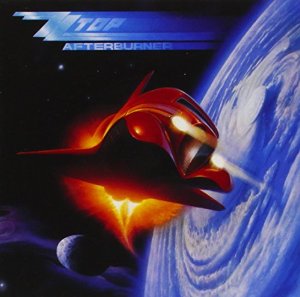
Users of the CMI Series III didn't have that sound restriction, and so used it much more as a replacement for real instruments and players.  That is pretty much what Hans Zimmer and ZZ-Top (like Afterburner) did.


Anyway, that simple stirred glass of water became a magical sound in the hands of a synthesist after electronic sounds, and from that POV, yes the CMI Series I has instant cool. 


Tuesday, December 29, 2015

Steampunk Wonders Of The Worlds - Watercolors and Music

Have been working on a series of watercolor paintings that all involve strange locations and a Steampunk Airship with the theme of a tour of wonders of the worlds.  And by watercolor paintings I really mean black ink sketches colored with watercolors.


The music and surround sound effects for videos using the paintings has been an ongoing task for some time too.

We put up low and high resolution videos on YouTube today of what we have been working on.   The first new video for over a year now.

The HD version being here:


Even though the video is up, we are still considering the format, and how it should look.  We didn't just want a slide show with a soundtrack, so we have images titles, panning and zooming on the images....and a screen that could be from a following camera drone or surveillance video, but haven't made any of that clear.

It is put together in Sony Vega Movie Studio HD and rendered as mp4. The music tracks were done in Reaper and some of the strange sounds were done in SuperCollider, and others in the ArpV2600 vst.


The Dolby Surround Encoding just involves having effects sounds assigned to the rear, mono channel, which is encoded with +90 and -90 versions added into the front channels, all just done with the Reaper PhaseAdjust JS plug in.

To do more complex movement a Surround Panner is required, like this one, but we haven't done anything in this video using it.


We have our own simple LM833 based surround decoder device for driving the rear channels in our studio, prototyped on Veroboard and in a previous Blog post.  Have now also tried a HD Audio Rush Sound Decoder  (bought on eBay from HK) , just with the analog in and found our own device sounds better and is quieter.  The HD Rush also comes with a switch mode plug back that generates audible hash, that is not there when powered from a 5V linear supply.  

We have more ideas for the series, to make more episodes, but we will see.....  this type of music video, that isn't focused on cars don't get much attention on our video channel.  It is interesting to see that we have some 3 digit subscribers to our channel, yet only single digit views on a new video...

I guess they aren't interesting enough and don't say very much to a general audience.


Sunday, December 13, 2015

SQ Quadraphonic - A Dead Surround Audio Format.... or is it?


The early 70s introduced the war of Quadraphonic formats that included SQ, QS, CD-4 and others. This was back when Hi-Fi was a thing, and was something a reasonable number of people had, even if only stereo systems.

None of those formats succeeded at that time and quadraphonic died out.  All the systems had problems and the early SQ and QS formats only gave an almost inaudible (3dB) front to rear channel separation in addition to costing twice as much... and the last thing a Classical record needs is to put the audience in the middle of the orchestra.  Rock didn't fair much better.

Later Full Logic decoders appeared.  These improved the channel separation  by using gain elements in the 4 output channels to exaggerate the difference between the channels in a controlled way to improve the channel separation.  Didn't help the market grow though.

SQ Full Logic Block Diagram

I have the 12" Vinyl Deep Purple Machine Head album emblazoned with a SQ logo and QUADRAPHIC, and have never heard it in 4 channels.  Been curious about that.

Now days every Home Cinema has Dolby Surround, and Cinemas are now going to Dolby's ATMOS system with some 60 channels.  But this cinema stuff doesn't really fit music, which doesn't have or want a centre channel, or delayed rear channels.

So could you use a Dolby Surround system with this old SQ Quadraphonic stuff?   That would  require some significant signal processing on the SQ encoded stereo signal first so your Dolby decoder only produced the front left and right and musical rear signals.  Even then, the rear channels were originally restricted to only 100Hz to 7kHz and had a 25ms or so delay added to them. Lots of compromises required, and the result wouldn't be what was mastered on the album.

Most people don't seem to care to sit and listen to music as they once did, unless it is on headphones from an MP3 Player,  so it would seem investigating and even SQ encoding our own musical endeavours in a dead quadraphonic system  is pretty much a waste of time and effort. 

That maybe, but we are considering it as we are pretty much set up to do it anyway with the Reaper DAW and it's JS development language and support for the encoder, and a switchable to  4 speaker and amplifier mixing environment.

The SQ Decoder, and doing that with a few transistors and a SMD based PCB for fabrication by OSH Park is not out of the question. either.  Not a huge Altium Project by any means.  

SQ Decoder Schematic

So not out of the question.   And these things from places like Sony still show up on eBay too.  A Development Kit with fast MCU and Stereo IN, Quad OUT, 16bit+ codecs would be a flexible approach for us C developers too.

So why?   But what about a music with visuals, as in a video?

Dolby Surround (Pro Logic) is a simple system, and what was used on the first Star Wars film in 1977. Their first Surround Decoders where actually designed by the people that did the best SQ decoders. What that system does give you is great separation between the front centre and mono rear surround speakers. Fine if you want Ambience in the rear channels. Not unworkable.

Now the original standard decoder filtered the Surround channel from 10Hz to 7.5kHz. Seems the later "Music" support of Dolby surround now actually has 5 equal full range speakers.
So a quick test of Surround  as L-R, with buffered inputs, and a L+R Center channel, and a level control on the front channels using dual LM833 Opamps looks like this when prototyped quickly. It is powered from a regulated 12VDC source.  The front channels are our standard mix set up, the rear are a DELL satellite + sub woofer we usually use for background music.

Surround = L -R, Centre = L+R matrix decoder
The schematic with a later added bypass switch, to disable the surround mix system is:


In Reaper, our music production DAW, we generated a surround channel by sending the rear tracks, that now aren't routed to mix output to Surround L and Surround R, with Surround L  inverted, and then add these to the mix.  So that tracks that are not dead Center or Rear are a bit of front and rear, and surround tracks are just from the rear. Dead Center just from the front.
The result sounds interesting, and stereo compatible, but not mono compatible. We will try a HD AUDIO RUSH decoder soon, and plan to do our mixes with these rear channels as one mix option.

It is surprising what a Mixed Media Concept Album can inspire in you.  I've spent the last couple of weeks listening to, and reading The Pentateuch of the Cosmogony

Now that isn't in surround, but has given us the drive to expand our own mixed media music art tech project....  An extension of our  SteamPunk Sunset.


.... unless life gets in the way, or something else comes up of course.

So SQ might be dead,  but surround and matrix encoding and decoding that came from it aren't.

And maybe this is a more appropriate logo for what we have done so far......


Sunday, November 22, 2015

FREE: The Heavy Metal Garage Hot Rod That Ate My Wallet Calendar 2016


Free PDF download from here:
The Heavy Metal Garage Hot Rod That Ate My Wallet Calendar 2016

It is for planning your month, with lots of space to write stuff, like what to pay, or this to be done by....  or at least we use it that way.

But some assembly is required! And this is they way you do it, even if it is for a previous version...


We can be contacted at Art & Technology